
Case Study
Japanese Friendship Garden of Phoenix:
The Garden Reveals Itself
Client: Japanese Friendship Garden of Phoenix
Project Type: Mission, Vision, and Values Development
Location: Phoenix, Arizona

Ben Schrepf, Director and Garden Curator, Japanese Friendship Garden of Phoenix
"Jeff didn't come in with preconceived ideas of what the product would be. He spent real time with our staff, our board, and our community, listening carefully to how people actually talk about the work and what drives them. He dug deep with our Japanese staff, and what they brought from their own lived experience informed the work in ways that genuinely connect with what the Garden actually is. What came back wasn't something we'd have to grow into. It was a clear articulation of who we already are, and now we have the language to help our donors, volunteers, and visitors understand why that matters."
A PLACE THAT DESERVES TO BE KNOWN
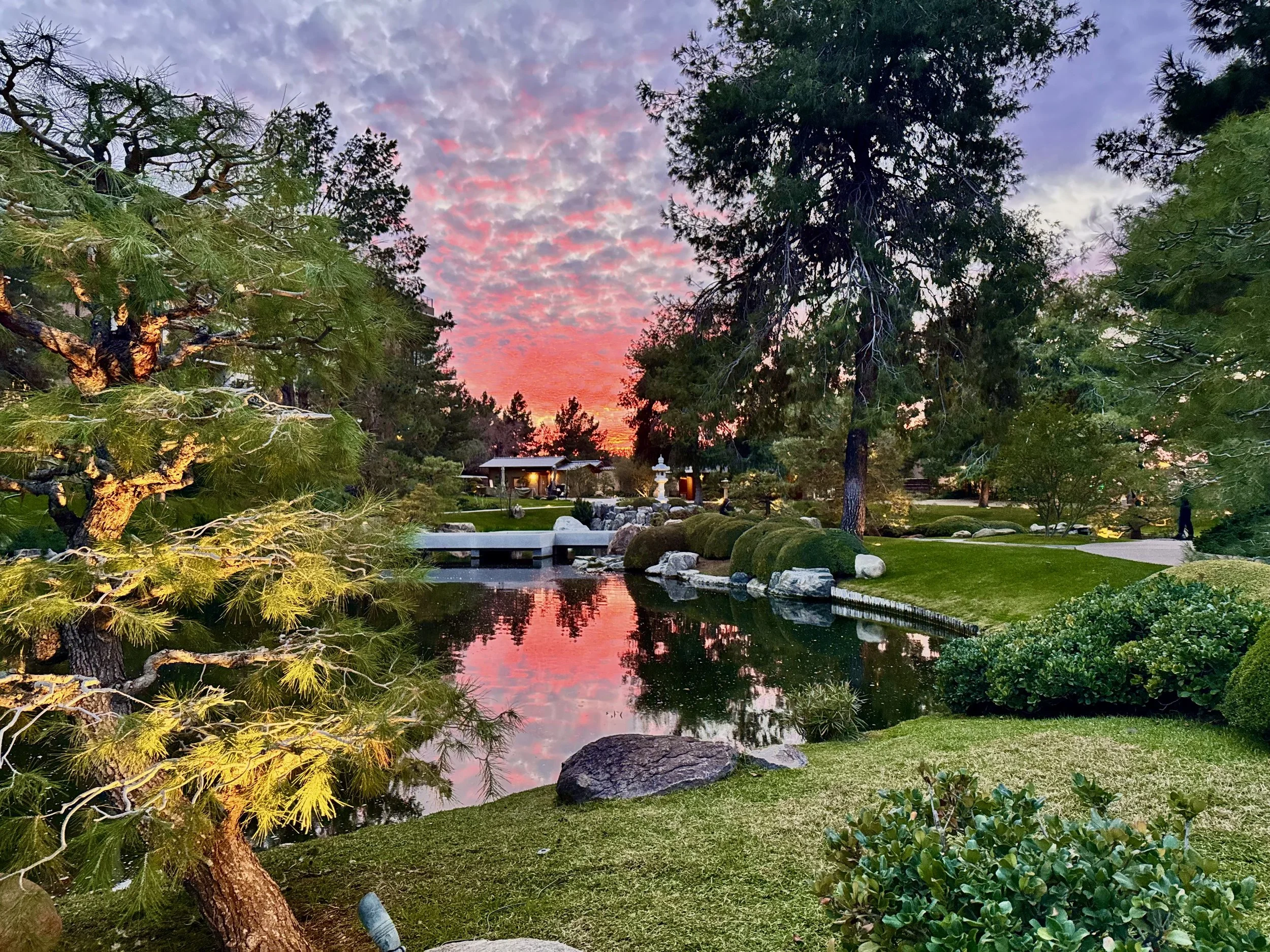
The Japanese Friendship Garden of Phoenix, Rohoen, is an authentic Japanese stroll garden built in the Sonoran Desert, a climate that has no business hosting one. The traditional trees and plants of a Japanese garden can't survive here, so the Garden's original designers worked with what could, recreating the look, feel, and spirit of the tradition from an entirely different palette. That work never stopped. The people who tend the Garden today continue to grow and transform it, always in keeping with the original intent. Stand on the path and you'd never guess that nearly everything around you was chosen because it can thrive in a desert.
A stroll garden is built to hide and reveal. You never see everything at once. You follow the path, and at each turn a new view appears, one that was there all along, placed exactly where the designer wanted you to find it.
Many Phoenicians still haven't visited, the way locals anywhere put off the remarkable place down the road. I was one of them until this engagement began, and I've been back more times than I can count since. What I found when I started listening to the people who work there is that the Garden's effect on a visitor isn't accidental. It comes from people who live their values every day: in how they care for each other, in how they greet a guest, in the patience they bring to work most of us would walk past without noticing.
THE WORK
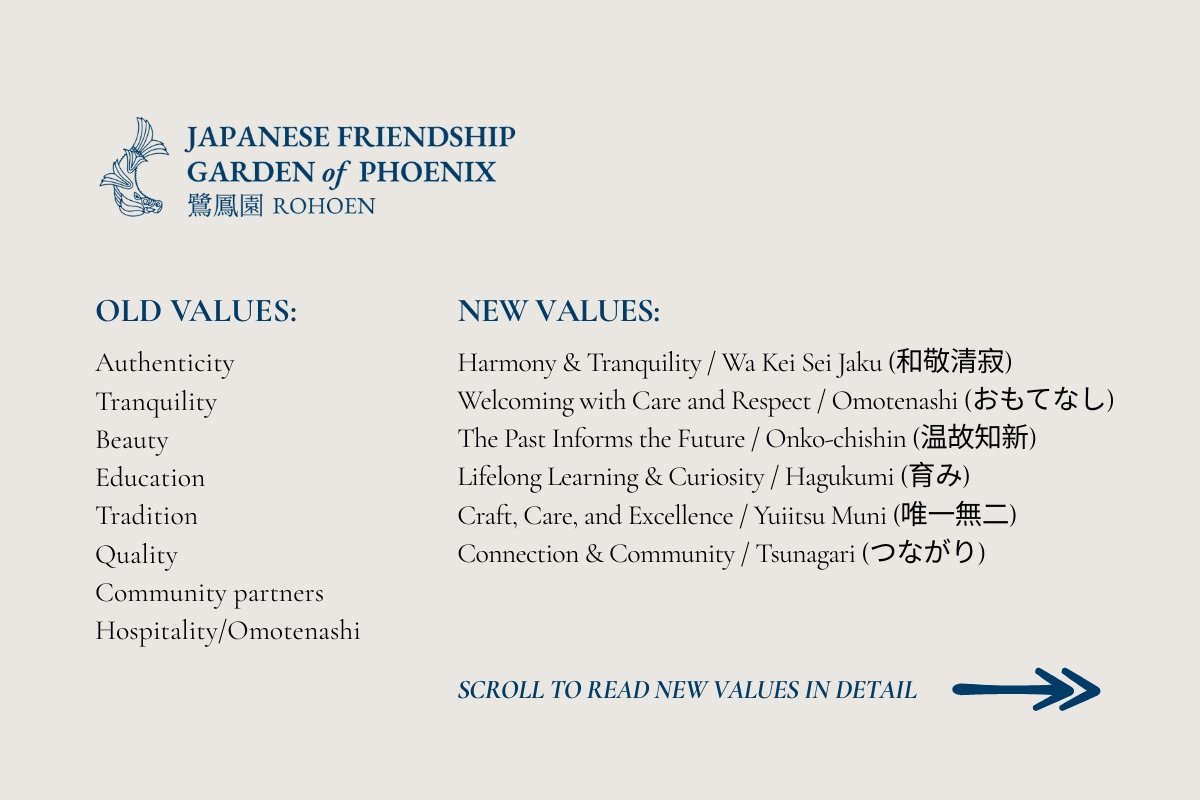
The Garden came to this engagement with a mission statement and a values list. The mission described what the Garden does but stopped short of naming the impact it has on people's lives. The values list was something else entirely: words like "Education," "Beauty," and "Quality" that name program areas and standards, not principles. They said nothing about how the Garden operates, what guides its decisions, or how its people treat one another. A word on a list is not a value.
This project covered mission, vision, and values together. The values are where the most distinctive work happened, but the mission and vision matter too, so here they are:
Mission
The Japanese Friendship Garden of Phoenix offers a welcoming place to slow down, find deeper presence, and take part in cultural traditions thoughtfully prepared and shared with care. Through an authentic Japanese stroll garden and immersive cultural experiences, visitors experience relief and restoration, carrying a sense of peace with them as they move through the world with curiosity, kindness, and respect.
Vision
A better way of living has taken root, guided by tradition and practiced with presence, intention, and care. People relate to each other, to nature, and to cultural differences with humility and generosity. The natural world, arts experiences, and cultural exchange enrich the character and wellbeing of our community.
VALUES
The values required a process that went deeper than the mission and vision alone: board and staff workshops, more than fifteen stakeholder conversations, and close attention to how the Garden's people talk about their own work when no one is polishing it for a brochure. Nothing here was invented. It was revealed.
Each value pairs an English principle with a Japanese concept that carries the same meaning with greater cultural depth and precision. Getting those pairings right took sustained, direct collaboration with the Garden's Japanese staff, whose lived understanding of these concepts shaped and changed the language throughout. What emerged reflects their knowledge and care as much as mine.
Each value has three layers: the name in English and Japanese, the principle itself, and a description of how it shows up in the Garden's daily work. Scroll through them below.
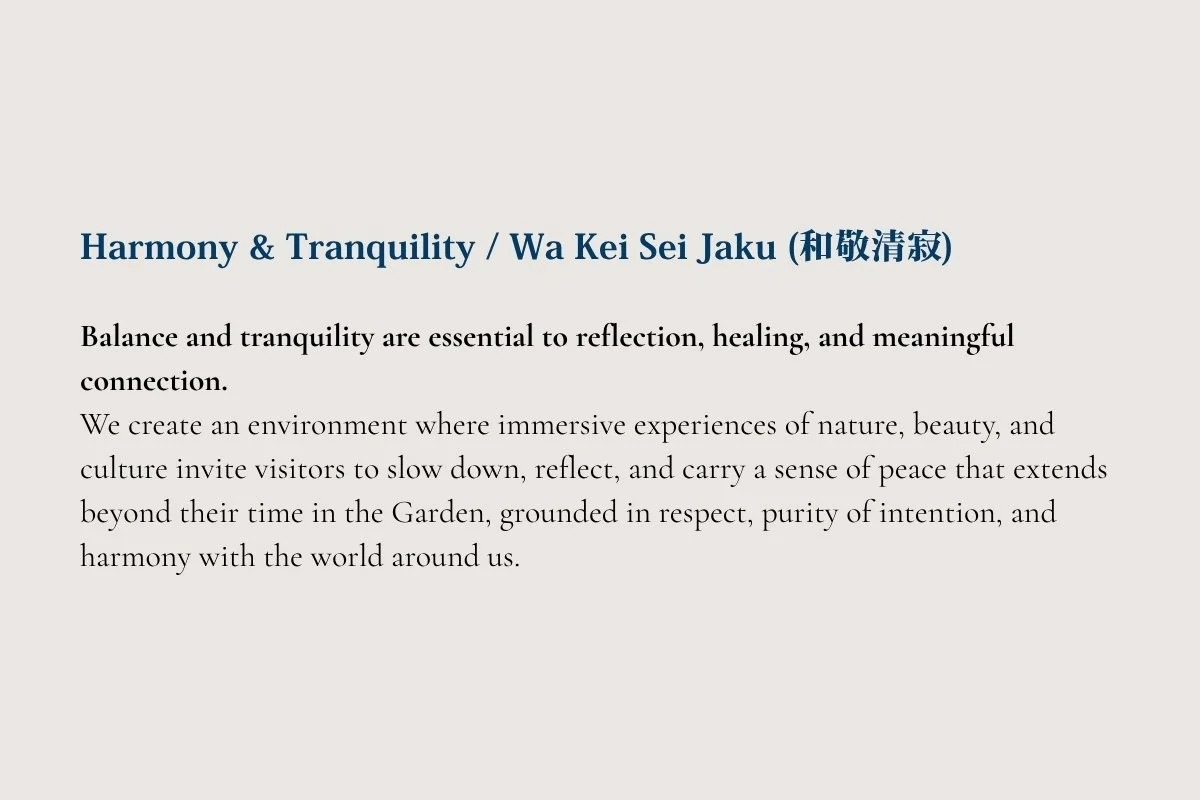
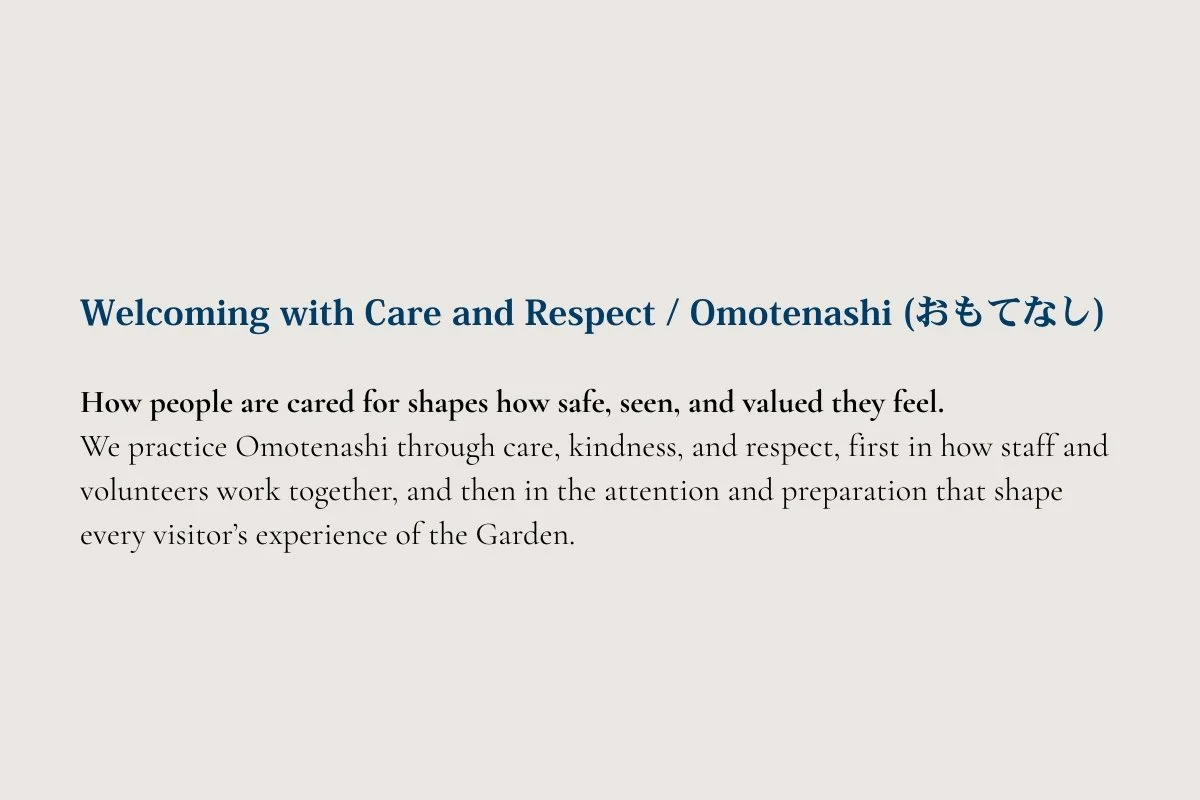
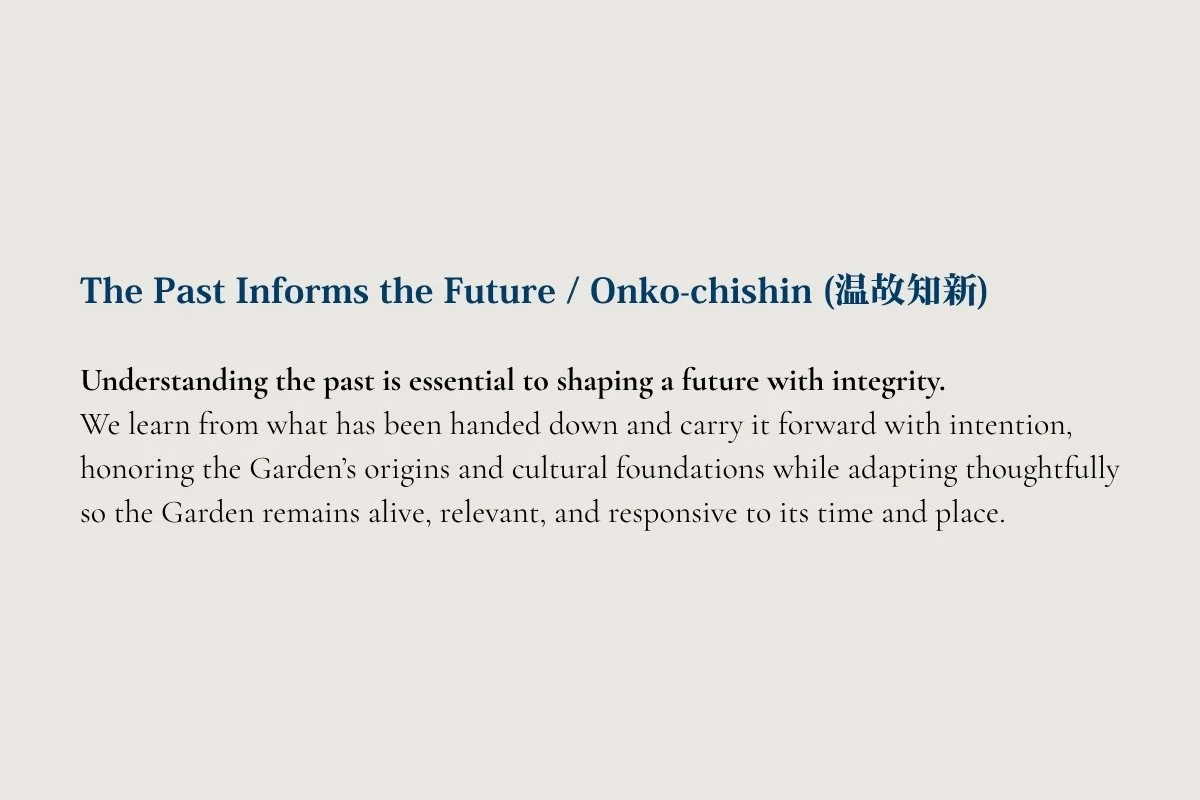
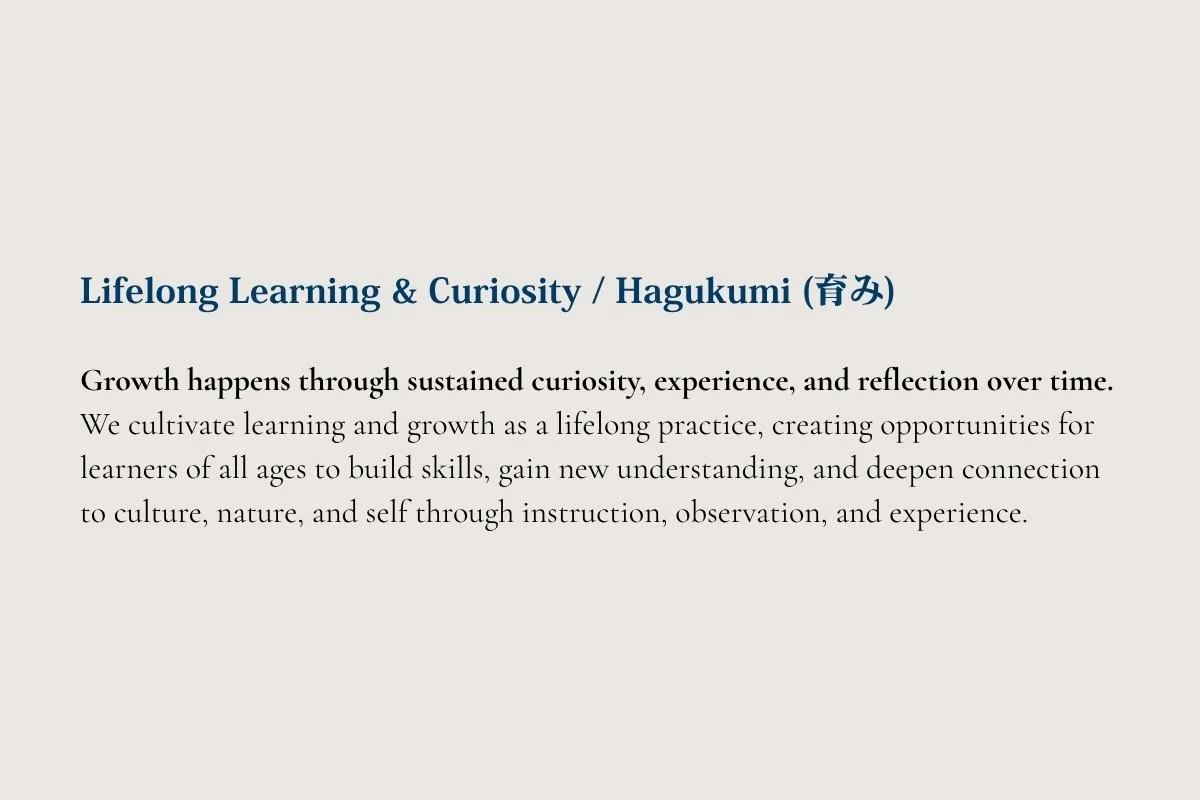
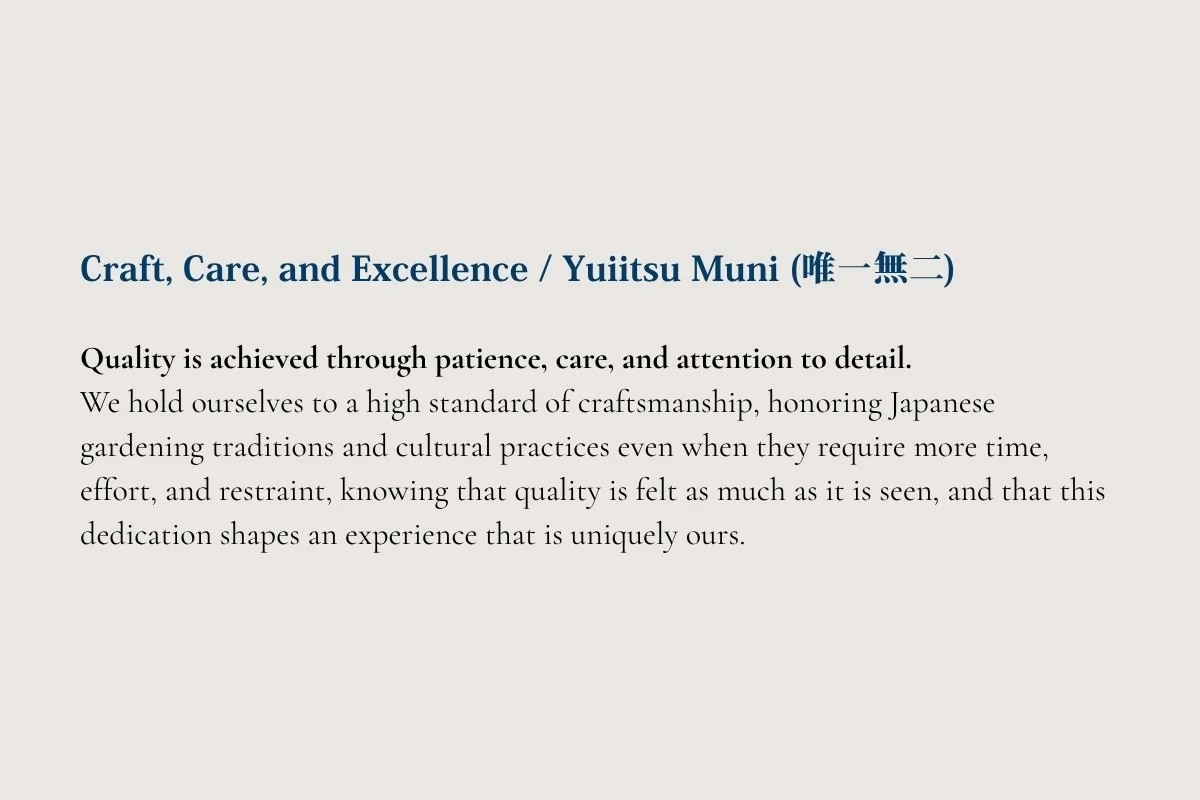
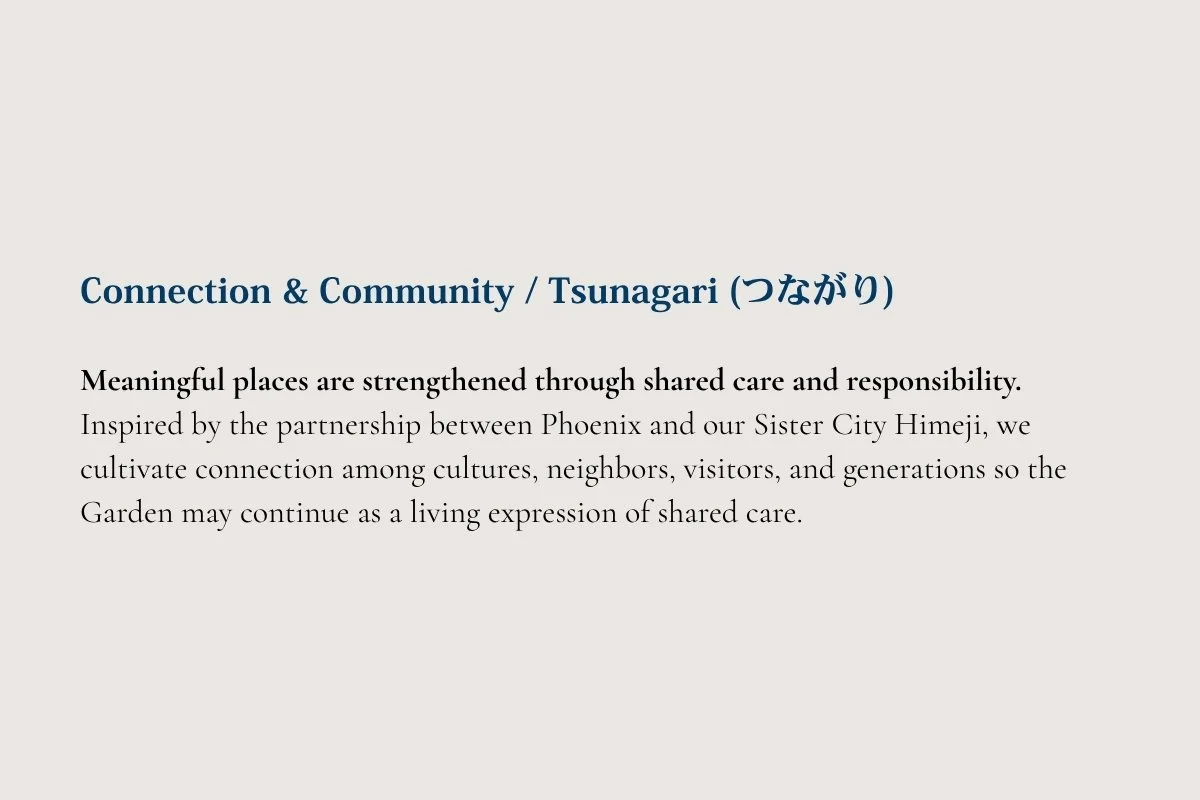
What moves me most about these values isn't the language. It's how accurately the language reflects what I had already watched. The staff lives these values in how they treat each other as much as in how they welcome a guest. That's the difference between values that are performed and values that are practiced. These are practiced.
WHY IT MATTERS NOW
The Garden is entering a capital campaign. Clear, specific language about mission and impact isn't a branding exercise in that context. It's a fundraising tool, a staff development framework, and an argument for why the Garden deserves to be known and supported by a broader Phoenix community that hasn't yet felt the urgency to walk through its gates.
MY VALUES IN ACTION
Good work always leans into an organization’s mission, and my approach is no exception. I believe that mission, vision, and values should guide every decision, creating lasting impact.
Here’s how I applied my own guiding principles to ensure this work reflects the Garden's deeper purpose:
Mission-Driven: Every element of this work connects back to the Garden's mission. The values don't sit beside it. They carry it forward in everything the staff does.
Impact-Focused: The new framework gives staff, board, donors, and visitors a clear way to understand what the Garden does to the people who experience it, and why that matters beyond the visit itself.
Empathy and Inclusivity: This work required deference to people with cultural and lived knowledge I don't have. The Garden's Japanese staff shaped this language in ways that made it stronger, truer, and unmistakably the Garden's own.
Connection and Understanding: Pairing English and Japanese concepts works in both directions: for visitors encountering these ideas for the first time, and for staff for whom they are not new ideas at all, but daily practice.